▶ Watch the Original
About This Video
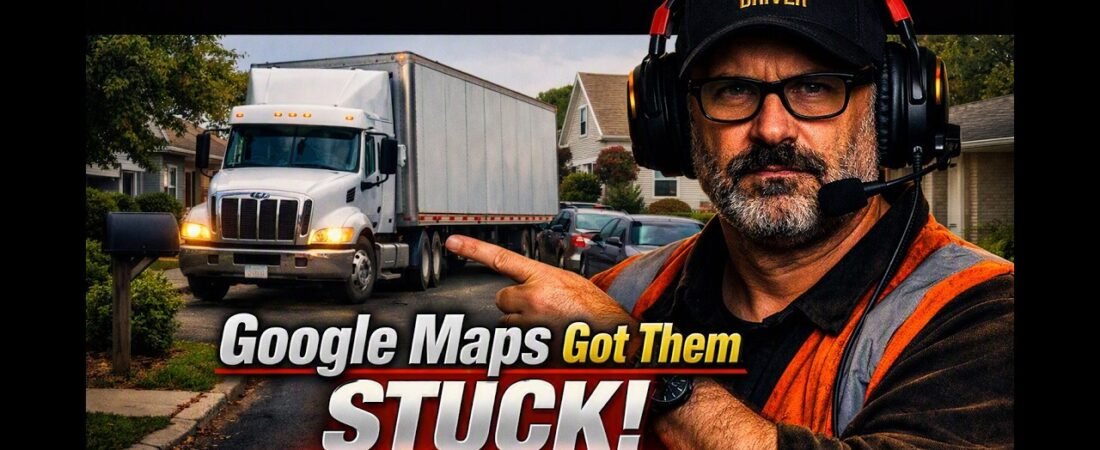
This reaction focuses on a familiar delivery-trucking problem: drivers follow Google Maps into neighborhood routes and end up getting stuck. The point is not that navigation has no place in the cab; it is that a general map app should not be treated as a substitute for truck-specific routing. For a company driver, choosing the right navigation before rolling can matter to the trip, the delivery, and the cost of a wrong turn. The video looks at why truck navigation belongs in route planning and why drivers should think beyond simply following the next instruction. It is a practical reminder to match the route guidance to the vehicle doing the job.
What Happened
The situations involve delivery trucks taking neighborhood routes while drivers rely on Google Maps instead of proper truck navigation. The sequence is straightforward: a driver follows the app, the route leads into a neighborhood, and the truck gets stuck. The concern is the mismatch between general map directions and navigation intended for truck work. When the route does not work for the vehicle, the driver is left dealing with a problem that could have been avoided through better route planning. The reaction highlights truck-specific GPS as the right tool to consider and encourages drivers to check their navigation before setting out. It also points to the cost of mistakes: a route choice that seems simple on a screen can turn into a costly problem during a delivery run.
My Take as a Company Driver
I think this is a good reminder not to let an app’s turn-by-turn voice make every decision for me. Before I head out, I’d make sure I’m using navigation intended for a truck and take a moment to review the route. If the directions start sending me through neighborhood streets, that’s where I’d pause and reassess instead of blindly pressing on. A delivery address is only part of the job; getting there on a route that fits the truck matters too. I wouldn’t assume a familiar phone app is enough just because it can guide me to the address.
Key Takeaways
- Set up truck-specific GPS for delivery route guidance.
- Do not assume Google Maps directions are appropriate for truck work.
- Review the route before setting out rather than relying only on turn-by-turn prompts.
- Neighborhood routes can leave delivery trucks stuck.
- Poor route choices can become costly mistakes.
Frequently Asked Questions
Can truck drivers rely on Google Maps for delivery routes?
The reaction cautions against relying on Google Maps instead of proper truck navigation. Use truck-specific GPS for truck routing.
Why use truck-specific GPS?
It provides navigation intended for truck work, rather than general map directions.
Leave a Reply